
Most people ask where St Martin is because they’re planning a trip. What they don’t expect is the answer that comes after: that this small Caribbean island — just 87 square kilometers — is shared by two countries, France and the Netherlands, with no border, no passport check, and no warning that everything
around you just changed.
I’ve lived here for years. And that duality never stops being quietly extraordinary.
St Martin sits in the northeastern Caribbean, about 300 kilometers east of Puerto Rico, between Anguilla to the north and St Barts to the southeast. It’s easy to reach, easy to fall in love with — and genuinely unlike anywhere else in the world.
✦ Two countries. One island. Zero borders. That's not a gimmick — it's your whole trip.
There are roughly 400 islands in the Caribbean. Only one is split between two
sovereign nations — and that island is St Martin.
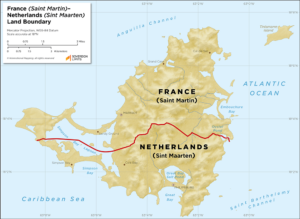
The northern side is Saint-Martin, a French collectivity. The southern side is Sint Maarten, part of the Kingdom of the Netherlands. The division has existed since 1648, making it one of the oldest international borders in the world — and one of the friendliest. There are no checkpoints, no passport controls, no moment
where someone official tells you that you’ve crossed from one country into another.
You just… cross. And everything shifts.
The language changes. The currency changes. The food changes. The pace changes.
Within the same afternoon, you can have a long French lunch in Grand Case and be at a casino in Philipsburg by evening. That’s not a travel itinerary — that’s just a Tuesday here.
For visitors, this duality is the whole point. It’s what makes St Martin impossible to replicate anywhere else in the Caribbean — or the world.
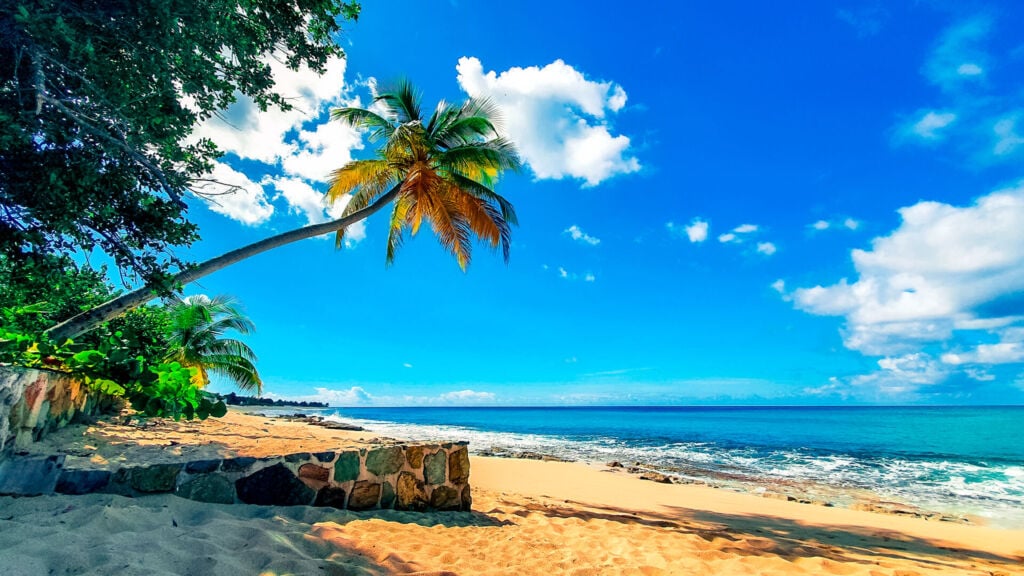
Saint-Martin is the northern two-thirds of the island, and it operates on French time — which is to say, unhurried, food-forward, and quietly proud of it.
The capital is Marigot, a harbour town with a market, a fort on the hill, and the kind of café terraces where an hour disappears without anyone noticing. Grand Case is the culinary capital — a single beach road lined with restaurants that would hold their own in Lyon or Paris.
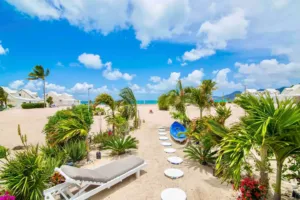
Orient Bay is where I live, and where most of the French side’s beach life concentrates: long, wide, reliably beautiful.
The currency is the euro. The outlets are 220 volts. The vibe is unambiguously European, with a Caribbean temperature and a rum punch at the end of the day.
✦ Grand Case has one road, one beach, and more good restaurants per meter than almost anywhere I've been.
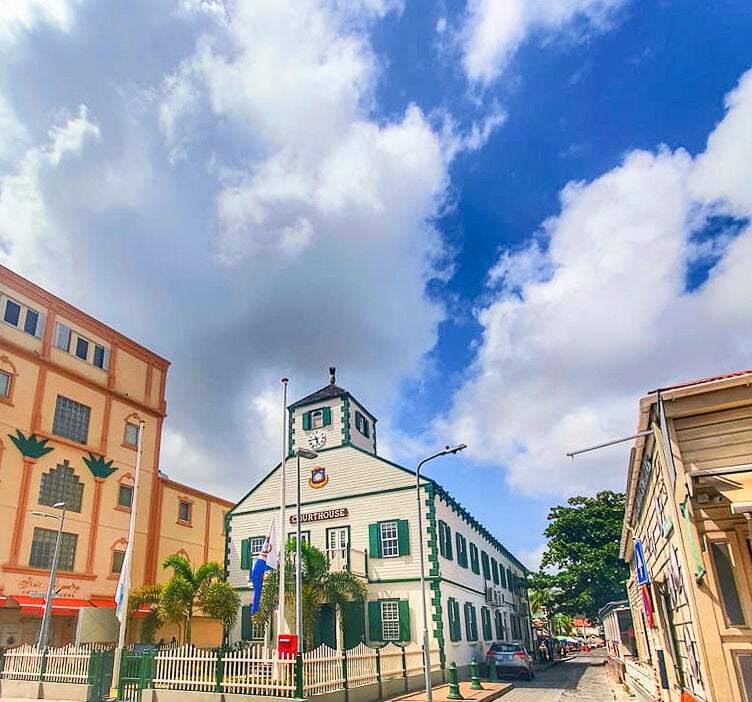
Sint Maarten is smaller in territory but louder in every other sense. Philipsburg, the capital, is where the cruise ships dock — and on busy days, the main street knows it. Simpson Bay is the social hub: bars, restaurants, nightclubs, a lagoon full of sailboats and the kind of energy that doesn’t apologize for itself.
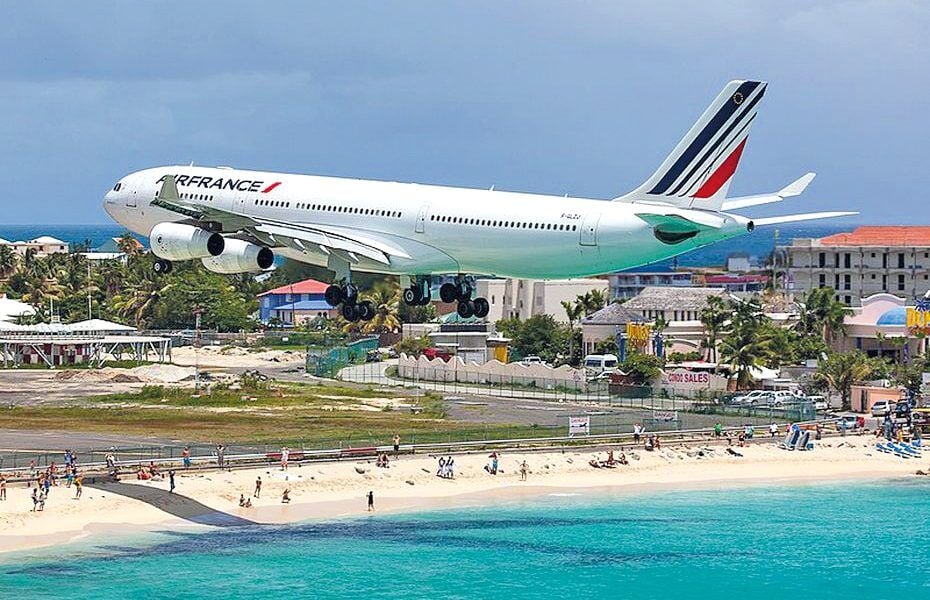
Maho Beach is in a category of its own — planes from Princess Juliana International Airport pass so low overhead that first-timers genuinely flinch.
The currency is the US dollar. The casinos are open. The pace is faster, the music louder, and the cocktails arrive without you having to ask twice.
It’s the same island, thirty minutes from Grand Case — and it feels like a different continent.
✦ Maho Beach is the only place I know where the arrival board doubles as entertainment.
St Martin sits at 18°N, 63°W in the northeastern Caribbean, part of the Leeward Islands in the Lesser Antilles.
It lies approximately 300 kilometers east of Puerto Rico, 9 kilometers south of Anguilla, and 25 kilometers northwest of St Barts. The island covers 87 square kilometers in total — 53 on the French side, 34 on the Dutch side — making it one of the smallest territories in the world to be shared by two nations.
Despite its size, it punches well above its weight in terms of what’s here: 37 beaches, two international airports, and a restaurant scene that has no business being this good on an island this small.
| From | Flight time |
|---|---|
| New York | ~4 hours |
| Miami | ~3 hours |
| Montreal | ~5 hours |
| Paris | ~8 hours |
| Amsterdam | ~9 hours |
One of the things I appreciate most about living here is the geography. St Martin isn’t just a destination — it’s a base. Within an hour in any direction, you have some of the most distinct islands in the Caribbean, each with a personality that couldn’t be more different from the last.
Anguilla is 9 kilometers north, and the ferry takes about 25 minutes from Marigot. It’s flat, quiet, and home to some of the most genuinely beautiful beaches I’ve seen anywhere — and I’ve seen a few. No casinos, no cruise ships, no chaos. If you need a day of pure, uninterrupted beach, Anguilla is the answer.
St Barts is 25 kilometers southeast and operates at a different price point entirely. The ferry from Oyster Pond takes about 45 minutes. It’s small, immaculate, and relentlessly stylish — think Gustavia harbour on a Saturday morning, yachts lined up, rosé already open. Worth a day trip. Worth more if the budget allows.
Saba is 45 kilometers southwest and the least visited of the three — which is exactly why it’s worth mentioning. Volcanic, dramatic, almost entirely given over to hiking and diving. The airport runway is famously the shortest commercial runway in the world. It’s not for everyone, but if you like your Caribbean with some altitude, Saba delivers.
✦ Three islands, three ferry rides, three completely different worlds — all within an hour of where I'm sitting right now.
Most visitors arrive through Princess Juliana International Airport (SXM) on the Dutch side — one of the most recognizable airports in the Caribbean, partly because of the planes that pass inches above Maho Beach on final approach.
Direct flights operate from New York, Miami, Montreal, Atlanta, Boston, Paris and Amsterdam, among others.
The French side has its own airport, L’Espérance in Grand Case (SFG), which handles regional routes — useful if you’re island-hopping from Anguilla, St Barts or Guadeloupe. St Martin is also a regular stop on Caribbean cruise itineraries, with ships docking in Philipsburg on the Dutch side.
If you’re coming from a neighboring island, ferries connect St Martin to Anguilla, St Barts and Saba on a regular schedule.
The dry season runs from December to April — reliably sunny, low humidity, temperatures in the low 80s Fahrenheit. This is high season, and prices reflect it.
If you want the best weather and don’t mind paying for it, this is your window. May and June are a sweet spot that not enough people know about: the crowds thin out, the prices drop, the sea is warm and calm, and the island feels like it exhales.
July through October is hurricane season. The risk is real, particularly August and September, and some businesses close. November sits on the edge — occasionally rainy, increasingly calm, and significantly cheaper than December.
I’ve had beautiful weeks here in every month of the year. But if someone asks me when to come for the first time, I say April or May without hesitating.
✦ May is the island's best-kept secret. The tourists have left. The sea hasn't got the memo yet.
St Martin is located in the northeastern Caribbean, approximately 300 kilometers east of Puerto Rico, between Anguilla to the north and St Barts to the southeast. It's part of the Leeward Islands in the Lesser Antilles.
St Martin is shared by two countries. The northern side, Saint-Martin, is a French collectivity. The southern side, Sint Maarten, is part of the Kingdom of the Netherlands. There is no border control between the two sides.
Same island, two very different personalities. St Martin (French side) is quieter, food-focused, with secluded beaches and a European pace. St Maarten (Dutch side) is more developed, with casinos, nightlife and the famous low-flying planes at Maho Beach. You can drive between the two in under 30 minutes.
You need a valid passport to enter the island, but once you're here, you can cross freely between the French and Dutch sides without any border checks or additional documentation.
Anguilla is 9 kilometers north — about 25 minutes by ferry. St Barts is 25 kilometers southeast — around 45 minutes by ferry. Saba is 45 kilometers southwest and reachable by a short flight or ferry. All three make excellent day trips.
December to April is peak season — dry, sunny, and the most expensive. May and June offer excellent weather with significantly lower prices and fewer crowds. July to October is hurricane season, with August and September carrying the highest risk.
Most visitors fly into Princess Juliana International Airport (SXM) on the Dutch side, with direct flights from New York, Miami, Montreal, Paris and Amsterdam. The French side has L'Espérance Airport (SFG) in Grand Case for regional flights. Cruise ships dock in Philipsburg.
🌊 Looking for more adventures?
→ See all things to do in St Maarten
→ Day trips to Anguilla from St Maarten

I've lived in St Martin for 25 years — and I'm an epicurean at heart, in love with my island. I've been giving out insider tips for almost 15 years.
Let me help you plan your perfect vacation in St Martin / St Maarten!
Browse all my recommendations in one place :

New to Airalo?
Use code NEWTOAIRALO15 for 15% off your first eSIM →