
Before heading to the beach, check current sargassum reports around St Martin and St Maarten. Conditions can vary by coast, wind direction and time of day, so this map helps you choose the best beach option for your plans.
After years of answering the same question — “are there sargassum on the beaches right now?” — I decided to build something useful. I get the worry. Nobody wants to land at their dream destination and find the beach covered in seaweed.
But here’s what 25 years on this island have taught me: St Martin is a small island. No beach is ever more than 15 minutes from another. If one shore is affected, a cleaner one is always within reach — and our map will show you exactly where to go.
I built this live sargassum tracker for our readers and guests, so you can plan your beach day with confidence and spend less time worrying about algae and more time actually enjoying the Caribbean.
Because sargassum is now, unfortunately, part of life across the Caribbean life — typically from spring through fall. Until someone finds a reliable solution, we adapt. We find the clean stretch, we move on, we enjoy. That’s resilience — and honestly, that’s what this island has taught me more than anything else.
There’s always a beautiful alternative waiting for you here.
🟢 Green: Clear conditions reported in the last 24 hours. Safe to swim.
🟠 Orange: Moderate seaweed presence. Swimmable but noticeable.
🔴 Red: Heavy sargassum. Expect thick seaweed on the shore.
Disclaimer : Beach conditions are reported by locals and visitors in real time. This map is for informational purposes only — conditions can change within hours. BookStMartin.com provides this map as a community service and accepts no liability for decisions made based on reported conditions.
Good news — if you’re visiting St Martin during winter, sargassum is non-existent across the island.
From roughly November through April, beach conditions are at their best, with clearer water, calmer shores and far fewer seaweed reports overall. In other words: this is the season most people dream about when they picture St Martin.
During that time of year, you usually don’t need to choose your accommodation based on sargassum conditions alone. Whether you prefer the lively atmosphere of Orient Bay, the sunsets of Grand Case, the nightlife of Simpson Bay or the luxury villas of Terres Basses, chances are you’ll be perfectly fine.
In short: winter is the easiest and most carefree time to enjoy the island — and you can generally book your stay with confidence, wherever you decide to stay.
Live availability
Browse our full selection of villas and condos across the island with live availability, photos and prices powered by Booking.com and Vrbo.
626 selected stays in this collection.
Some properties may require a minimum stay. Try 4 nights or more if availability looks limited.
Choose your dates above to see live prices and availability.
Summer is when sargassum becomes a little more unpredictable in St Martin — especially on beaches facing the Atlantic side of the island.
The good news? It rarely affects the entire island at once. Conditions can vary dramatically from one beach to another, sometimes within just a 15-minute drive.
In general, the Caribbean side tends to stay clearer during peak sargassum months. Areas like Grand Case, Anse Marcel, Friar’s Bay or Terres Basses are often considered safer choices for travelers looking for calmer beach conditions.
The key is simply choosing the right area for the right season — and booking with realistic expectations rather than fear.
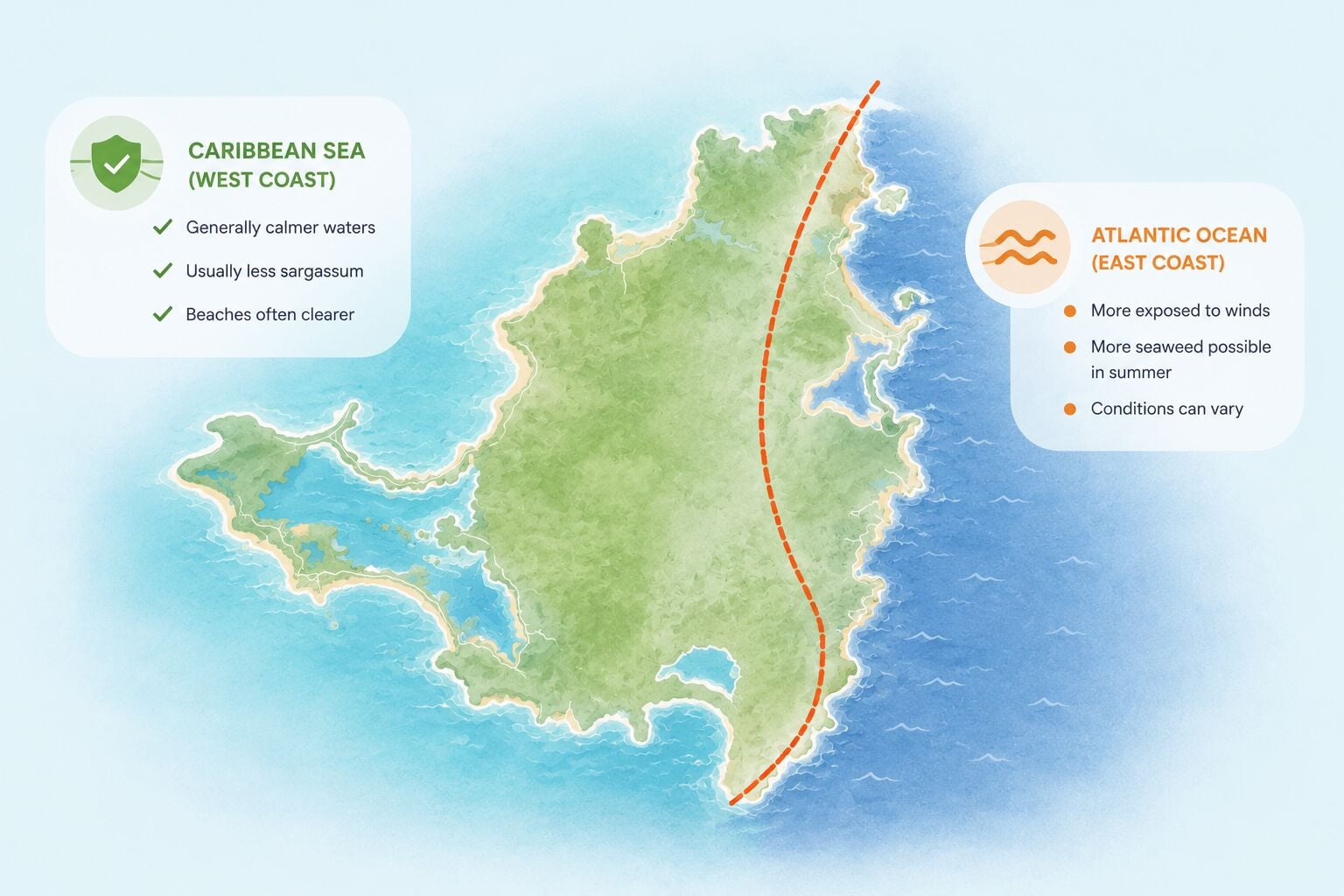
Yes, this side of the island can occasionally see more sargassum arrivals between late spring and the end of September.
But unlike what some social media posts may suggest, that does not mean the beach becomes unusable for months. I live in Orient Bay year-round and see these conditions with my own eyes — and the reality on the ground is often far less dramatic than what circulates online.
The main beach areas in front of the restaurants are cleaned every day — often early in the morning — by the Collectivité and local beach establishments. Conditions can also change quickly depending on winds and currents, and many visitors still enjoy beautiful beach days in Orient Bay throughout the summer.
And honestly, that’s one of the advantages of staying in St Martin: the island is small. Even if seaweed happens to be heavier on one beach on a particular day, you can easily spend the afternoon in Grand Case, Friar’s Bay or another calmer area just 15 to 25 minutes away.
In other words: if you’re an easy-going traveler, occasional seaweed arrivals are very unlikely to ruin your vacation. Life on a Caribbean island means adapting to nature sometimes — and honestly, most visitors end up doing exactly the same without it affecting their trip much at all.
Check the live map above for real-time conditions. Each beach is color-coded based on reports submitted in the last 24 hours by locals and visitors on the ground.
The eastern beaches — Orient Beach, Cul de Sac, Coralita and Oyster Pond — are the most exposed because they face the open Atlantic. When sargassum seaweed levels are high, the western and northern beaches such as Grand Case, Friar's Bay and Baie Rouge are usually the best alternatives.
Yes, sargassum is not dangerous. It is a natural seaweed that can be unpleasant to swim through but poses no health risk for most people. If you are sensitive to strong smells or have skin sensitivities, we recommend choosing a green-rated beach on the map.
Sargassum has been a regular feature of Caribbean beaches since 2011. On St Martin, the season typically begins in late March or early April, peaks between May and August, and tapers off by October. Outside of this window — from November through February — most beaches remain clear. That said, intensity varies significantly from year to year depending on ocean currents, wind patterns and Atlantic bloom conditions.
The map is updated in real time. Anyone on the beach can submit a condition report directly from the map — no account required. Reports expire after 24 hours so the information always stays current.
Simply check the map for the nearest green beach. On an island this small, a clear beach is never more than 15 minutes away. Grand Case, Friar's Bay and Anse Marcel are reliable alternatives on the French side. Mullet Bay and Simpson Bay tend to stay cleaner on the Dutch side.
Yes — and we encourage it. Click on any beach marker on the map and select the condition you observe. Your report helps other visitors plan their day. Reports are anonymous and take less than 10 seconds.
🛡️ Sargassum or not — things don't always go as planned. Make sure your trip is protected.
AARDY compares plans from top US providers in seconds.
→ Compare travel insurance plans


